
 |
||||||||||||||||||||||
 |
|
|||||||||||||||||||||





















 |
 |
 |
 |
 |

| The Facts |
| Name:
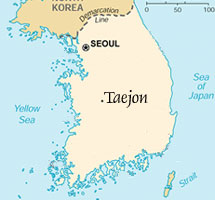
Se Ri Pak It's Pronounced: say ree pahk English Name: none Birthday: September 28, 1977 Home City: Taejon, South Korea |
 |
| American
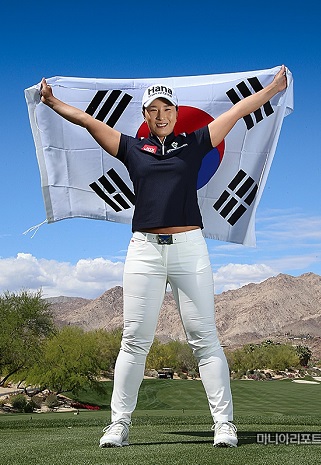
Home City: Orlando, Florida Rookie Year on LPGA: 1998 LPGA Wins: 25 LPGA Majors: 5 Rookie of the year finish: Won it by a landslide! Height: 5' 6" Weight: 147 lbs. Family: Two sisters; one younger, one older Best score: 61 Best Scoring Average for a year: 69.69 (2001) Best Season money total: $1,722,281 (2002) Best Season Money Position: 2nd (1998, 2001, 2002, 2003) Most Top Tens/Season: 20 (2003) 2024 LPGA Status: In the Hall of Fame; Category 16; retired Post-season awards: 2006 Heather Farr Award; 2003 Vare Trophy; 1998 Rookie of the Year Strong Statistic: Greens in Regulation, Eagles Nicknames: The Magic Princess (because of a Japanese cartoon character from the 80's named Seri the Magic Princess!); the Golf Queen (for obvious reasons). Other Sports: Sprinting, shotputting (!), kickboxing, taekwando Hobbies: Shopping, playing video games, practicing golf, watching TV, mountain climbing (those are great hobbies!) Sponsors: Hana Bank, JDX, Caido Why is she a Seoul Sister: Because she is the very best Korean golfer of all! How's her English?: Quite good Best part of her game: She's strong at everything, but her approach shots with short irons are incredible. Also has one of the best mentalities in the game. Needs to work on: a little more variety around the greens. Distinguishing physical characteristic: Her legs. Se Ri is incredibly buff. What's cool about her: No matter how she does, she is always pleasant and happy. She never complains about bad breaks or unfair situations, chalking it up to the way golf is. And she always respects her opponents, never trash talking. She works harder than you could imagine. And she has a wonderful smile and giggly personality. Se Ri rules! Cool possible headlines: 'She's Se-riffic!', 'Leader of the Pak', 'Head of the Pak'. If she were a Rat Packer, she'd be: Frank Sinatra - the undisputed leader of them all. |
 |
|||||||
|
|||||||
|
|||||||
| Bio |
|
Although I like Mi Hyun and Grace a lot, Se Ri is by far my favorite Seoul Sister. She was the player whose great play first got me interested in the sport of golf. And her skill and wonderful attitude has kept me coming back to the LPGA ever since. Thanks, Se Ri! Se Ri started playing golf at the age of 14, when her dad lured her away from track and field; she had previously done the shotput and sprinting events. Se Ri quickly became quite good at the game, so her father relentlessly drove her to achieve ever greater results. She would wake up every morning at 5:30 am to run up and down the 15 flights of stairs in her apartment building. Forwards and backwards. Working to make her track athlete's body ever stronger. She would be at the driving range all day, even on days so cold icicles formed in her hair, practicing relentlessly. Then there's the famous story of how she told her dad she was afraid of cemeteries, so her dad made her stay in one all night until she overcame her fears. All this was hard on a young girl who wanted to spend time with her friends, and do stuff other teenagers do, yet had no time for anything but golf. But she soon started getting results. Before long, Se Ri was the best amateur in the country. This is especially amazing when you consider that, in Korea, there are almost no public courses, and Se Ri's family was only able to afford to buy her a membership to a club for one year. She essentially got all her experience on real courses during practice rounds at tournaments, and the rest of the time was confined to driving ranges. The other girls did not welcome the middle class golfer, either, as they were mostly from wealthy families. Se Ri was hurt, but kept practicing and winning. It was a little consolation. It got to the point where her family was so strapped for cash that Se Ri was taking buses to tournaments! So she turned pro, and quickly made a name for herself. In two years on the KLPGA tour, she won 6 times and finished 2nd seven times (in only 14 tournaments played!). This got the attention of Samsung, who signed her to a lucrative contract. Now she no longer had to worry about money, and Samsung afforded her the chance to try the next step: to come to America and see if she could conquer the LPGA. No Korean golfer had had much success over here, though, so it seemed like a long shot. They hired David Leadbetter to help tune her game. This was the first time Leadbetter had elected to work with a woman as a regular pupil. He was impressed by Se Ri's strength, work ethic and talent. Their goal was simple: get Se Ri onto the LPGA for 1998. Hopefully once there she could win a couple of tournaments and make a name for herself. It was hard on Se Ri, being in Orlando, thousands of miles away from her home, in a place where she barely spoke the language. But she worked on, and again her efforts paid off. She easily won the Qualifying school tournament (tying with Cristie Kerr). At least a few people knew what was coming next: Laura Davies, who had been waxed by Se Ri in a tournament in Korea several months earlier, actually placed a 60 pound wager on her to win her inaugural tournament in the LPGA! She didn't, but in just a few short months, she made history by becoming the youngest woman to ever win the LPGA Championship, one of the four Majors in the LPGA. What's more amazing, it was her first win and first TOP TEN on the LPGA. She handled the pressure like a veteran, though only 20, leading the tournament from start to finish. From there it's been one amazing accomplishment after another, including winning three more majors, and setting the low score in LPGA history by being the first woman to ever shoot 61 (at the Jamie Farr Kroger Classic). In 1998, the pressure and fame eventually got to be too much, and on a trip back to Korea, she was hospitalized for exhaustion. The media coverage of her is such that cameramen actually entered her hospital room and filmed her there, tears running down her cheeks, with tubes coming out of her arms. Since that day, Se Ri has been trying to gain more control of her life, more space to live and not just be a golf machine, while at the same time continuing her awesome play. It hasn't been easy, but she is easy to root for in her quest. She has tried to endear herself to Americans by learning English and using it (many of the other Korean players still use translators). Her English is a bit confusing at times, but it's still better than not using it at all! She is relentlessly positive, and genuinely seems to enjoy herself out there. I really became a Se Ri fan not after watching her play, but after seeing her interviewed. She comes across as a bubbly girl/woman who never has a bad word to say about anyone, and who is having a ball doing what she does. She is already among the best in the world, and as she continues to work hard and get more practice playing on real courses and not just driving ranges, her overall game gets stronger and stronger. Over the last several seasons, Se Ri has established herself as the second best player in the women's game. But as awesome as her achievements have been, she has not yet been able to topple Annika Sorenstam from the #1 spot on tour. Still, her list of gaudy accomplishments keeps growing. She became the youngest woman in history to win four Majors when she captured the 2002 LPGA Championship. She holds two of the best season ending scoring averages in history. She finally won the Vare Trophy for low scoring average in 2003, the first time she broke Sorenstam's stranglehold on post season hardware (although, to be fair, Annika would have won it had she showed up for more tournaments; Sorenstam failed to meet the minimum requirement and so, despite having a lower scoring average than Se Ri, did not win the award). Most impressively, Se Ri became the first woman in 58 years to make the cut in a men's golf tournament when she played the SBS Super Tournament on the Korean PGA tour. In fact, not only did she make the cut, she finished tenth, and was in contention for the first three days to win!! 2004 was by and large a tough year for Se Ri, although she had one impressive highlight early on. In May she won the Michelob Ultra Open for her 22nd career win. More importantly, this gained her the final point she needed to qualify, at age 26, for the LPGA Hall of Fame. Thus, she became one of the youngest players in history to manage this feat (although she must wait until the 2007 season to enter the Hall, as you must play at least ten years on tour before entry). Unfortunately, almost immediately after this achievement, Se Ri's season took a sharp downturn. Her biggest problem was her driving: all of a sudden, she found it impossible to keep her driver straight for any period of time. As her driving accuracy plunged, all her other stats followed. Se Ri had ended the 2003 season with top tens in 13 of 14 events. In 2004, by contrast, she managed only one top ten in her final 13 events (although she came close a few times). She even took a month off mid-season in order to fix her problems, but when she came back, she produced the worst event of her entire career, the first time she had ever finished last in the field (at the Samsung World Championship, an event she had won in 1999). Se Ri chalked up her struggles to burn out, and claimed that she had not taken more than four days off in a row since starting golf as a teenager. She intended during the off-season to take five weeks off and hopefully rejuvenate herself. But just as she prepared to start her winter training in January, 2005, her longtime caddie, Colin Cann, resigned to work with up and coming American star Paula Creamer. Still, she hoped that a few months of work and she would be back on the right track for 2005. Alas, 2005 turned out to be far, far worse than even 2004 had been. She seemed completely at sea at times, and in the entire year was not even able to achieve a top twenty finish, let along a win. Se Ri Pak, a golfer who had only twice finished outside of the top three on the money list,was not even able to crack the top 100 in 2005. It got so bad that there was even talk that she might forfeit her exempt status for 2006 because she was not able to play enough events. Exacerbating things even further, she broke a finger at the British Open in late July, and was not able to play another event for the rest of the year. She was thoroughly burned out, and talked to the press about needing to find interests outside golf. But the enforced time off due to the finger proved to be a blessing rather than a curse. Unable to practice, she was in fact able to indulge some of her other interests, including mountain climbing, kick boxing and taekwando. She claimed in December, as she headed back to Florida to renew training, that she was refreshed and ready once again to train at her usual levels. She then started a super intense practice regimen lasting most days from 7 am until after dark, all with the goal of at last recapturing her form of old. In 2006, even in early tournaments, the fruits of that labor were obvious. Not having played in eight months, she was definitely rusty, but still putting together decent outings, with finishes averaging around 40th place. But after she missed the cut at the Takefuji Classic in April, her game took a turn for the better. A few weeks later, she made her first top ten since 2004 at the Ginn Clubs and Resorts Open, where she finished ninth. Her driving accuracy improved to the point where she was usually hitting more than 10 fairways/round, light years better than the 5 - 6 fairways she was averaging in the depths of her slump. At times, all that was holding her back was her putting. Then came the McDonald's LPGA Championship, her second Major since returning. Se Ri had already shown in 2006 her old ability to play tough courses, and it came in handy here. She managed to shoot all four rounds under par, and came into the final hole with a one shot lead and the event seemingly in hand. But she three putted the final green and ended up in a playoff with Karrie Webb, who herself was experiencing a renaissance in 2006. Se Ri's drive on the playoff hole was mediocre, and she left herself 201 yards to the pin for her second, while Webb was only about 135 yards away. Reaching into her bag of tricks, Se Ri then hit arguably the greatest shot of her career, a lightning bolt with a rescue club that ended up mere inches from the hole. The tap in birdie completed one of the greatest comebacks in the history of sports. She had fallen almost off the map in 2005, but just a year later, she claimed one of the most important events in women's golf in the most amazing way imaginable. Once again, Se Ri is back, perhaps better than ever! Se Ri Pak started 2007 slowly, but still had several good finishes to her credit. She came tantalizingly close to finally winning the Kraft Nabisco; she led after three rounds, but had an uncharacteristic collapse in the final few holes to drop down to 10th. In June, after finishing the first round at the LPGA Championship, she officially qualified for the LPGA Hall of Fame at last. At the US Women's Open, she finished tied for 4th. But it was at the next event, the Jamie Farr, where she really excelled. She shot a 63 in the opening round and four rounds in the 60s to win for the 5th time, becoming only the third woman in LPGA history to win the same event five times. In November of 2007, Se Ri Pak finally entered the World Golf Hall of Fame, becoming the first Korean, male of female, to ever do so. She had the honor of raising the Korean flag to fly outside the Hall. It had never flown there before, but will now do so forever. After the season ended, she played in two important team events. At the Kyoraku Cup, she was part of the Korean team. She played the first day only and won her match, but then had to leave to go to Perth, Australia, where she prepared for her role as captain of the Lexus Cup team. Korea would go on to lose the Kyoraku Cup in a playoff, but Se Ri powered the Asian team to an overwhelming win at the Lexus Cup. She herself was undefeated, winning both of her team matches paired with In-Kyung Kim, and tying a match with Suzann Pettersen after Pettersen was forced to quit due to injury. Se Ri did not have a strong start to her 2008 season. She notched a top ten at the Nabisco, but missed the cut for the first time ever at the US Women's Open and failed to defend her title at the Farr, finishing outside the top ten. She was in the news as much as ever, however. Her appearance on a comedy Korean TV show called Golden Fishery was one of the highest rated they ever had, and the success of the 'Se Ri Kids' in 2008 reminded people over and over of her impact. The Se Ri Kids, so named by the Korean media, are a group of Korean woman golfers who were directly inspired to take up the game by Se Ri's success in 1998; almost all at once, they began winning a lot on the LPGA in 2008. Among the Se Ri Kids in the news in 2008 were Inbee Park, who won the US Women's Open, and who took the game up two days after watching Se Ri's US Women's Open win ten years earlier; Eun Hee Ji, who won in Rochester just a week before the Open; Ji Young Oh, who captured the State Farm in July; and Na Yeon Choi, who was one of the top rookies of 2008, and who almost won the Evian in late July. 2009 was an all right season for Se Ri, at least by the lesser standards of the last few years. She finished 30th on the money list, but only notched two top tens. Her best moment came at the State Farm. She finished as the clubhouse leader, but fellow Korean In-Kyung Kim made two late birdies to beat Se Ri by a shot. 2010 saw Se Ri return to the winner's circle for the first time since 2007. The event was the Bell Micro Classic in May. With one round to go, Se Ri was in a tie for the lead with Major winners Suzann Pettersen and Brittany Lincicome. Then the rains came, and the last round was canceled. They decided instead to have a three way playoff for the championship. On the second playoff hole, Pettersen overshot the green and could not get up and down. Se Ri also flew the green into a bunker, hit a decent shot to ten feet, then nailed the clutch putt for the par save. On to the next hole! This time, Pak hit her drive into a fairway bunker, and was left with just about an impossible shot to get it close to the flag. Just what she was waiting for! She hit the heroic shot, one of the best of her career, to six feet and drained the birdie for her 25th career win. Se Ri finished the year with 3 top tens and a 32nd position on the money list. Se Ri struggled with injuries in 2011, and was not able to win, but still had a decent season, finishing 27th on the money list with more than $400,000 in earnings. She put herself into contention for wins several times. She had a fourth place finish at the Sime Darby in Malaysia, despite having such severe back pain that she could not bend down to retrieve her ball from the cup after each putt. Her best Majors were a tie for 10th at the Nabisco (which was nearly her best ever finish at that event, the only Major she still has not won); and a tie for 14th at the British Women's Open, after she gave fans a thrill by taking the second round lead. She also had a tie for 5th at the final State Farm Classic. Perhaps the strangest moment of her year was when she was disqualified for signing an incorrect scorecard at the Hana Bank, the only event played every year in Korea. She claimed it was the first time that had ever happened in her career. At the end of the year, Se Ri signed a new sponsorship deal with KDB (Korea Development Bank). The deal was for three years, a good sign that Se Ri is not thinking about retiring any time soon. 2012 was a frustrating season for Se Ri. When she was healthy, she played very well, and put herself in contention several times for wins. But she struggled with various medical issues the rest of the time. Some of the maladies weren't even golf related. In Alabama early in the year, she tripped down a flight of stairs and injured her shoulder; this shoulder problem nagged her the rest of the season. The big focus for Se Ri in 2012 was the return of the US Women's Open to Blackwolf Run. This was, of course, the place where, in 1998 as a 20 year old rookie, she won the longest tournament in LPGA history to set off the Korean golf revolution. Pak wanted nothing more than to win there again, but her shoulder problems made it doubtful she would even be able to play. Fortunately, she not only played, she finished tied for 9th. She was there to congratulate the champion, Na Yeon Choi, who was one of the many 'Se Ri Kids' who had been inspired by Pak's heroics to follow her dreams to the LPGA. Among Se Ri's five 2012 LPGA top tens were a near miss in Korea at the Hana Bank. She was still in it on the final hole, but needed an eagle to have any chance. Her eagle chip was tracking, but alas stopped just short of the hole. She had, however, won in Korea earlier in the year, when she claimed her sponsor's event on the KLPGA tour, the KDB Daewoo Securities Classic. It was her first win in Korea in nine years, and among those she beat in the field that week were Open champ Choi. Se Ri finished her year playing at the Swinging Skirts event in Taiwan. Although she did not win there, she did win the unofficial Skins Game that preceded the event. Se Ri's final position on the LPGA tour money list: 33rd, with over $430,000 earned. Considering she played injured and missed a lot of events, that's a pretty solid year. Se Ri's 2013 season was much like her 2012 season. She finished just one spot worse, 34th, and made about $10,000 more money than in 2012. She carded three top tens during the year, with her best finish a tie for 4th at the year's fifth Major, the Evian Championship. There she contended much of Sunday, but was not able to make the birdies she needed to catch the leaders. She finished her year with back to back top tens at the KEB Hana Bank Championship in Korea (T-8th) and the Sunrise LPGA Taiwan Championship (T-5th). Se Ri had a pretty good start to her 2014 campaign. She had a few top twenties early, then a T-6th at the Kia Classic. Everything was geared towards her finally winning the Kraft Nabisco, the one Major that has always eluded her. And she made a great run at it, too! She was in contention on Sunday, but the course was especially set up for long bombers that season, with basically no rough, and Se Ri couldn't hang with Michelle Wie and Lexi Thompson. Thompson eventually won, but Se Ri had her best finish yet at the event, a tie for 4th. Next year for sure!! Se Ri wound up playing only intermittently the rest of the season, perhaps once again dealing with injuries? She had 3 top tens and finished 59th on the money list. In the Winter, she signed a new sponsorship deal with Hana Bank, calling it her final two-year deal before retirement. She wanted to make one more push to try to make the Olympic team in 2016. She joined So Yeon Ryu, Hee Young Park and MJ Hur on the Hana Bank team. Alas, Se Ri struggled most of 2015 with injuries. She withdrew from several events before stopping for the year in June. Before that, she had some limited success, notably a tie for 10th at the Kia Classic in March. Early in 2016, Se Ri announced that she would be retiring at the end of the season. She didn't have a very good season on the fairways, with only one result inside the top 40. But everywhere she went, she was treated with the respect she had earned as a true pioneer. She played her final event in America, fittingly, at the US Women's Open, where she missed the cut. A few months later, she played her last ever LPGA event at the KEB Hana Bank in Korea. She played one round, then dropped out. She was treated to an amazing farewell celebration after she finished, with a children's choir, a video presentation, and a sea of the golfers she had inspired, all wearing "Thanks, Se Ri" hats to honor her. It was a veritable who's who of Korean greats, from her old friend Grace Park, to recent Hall of Famer Inbee Park, to So Yeon Ryu, Na Yeon Choi and younger players like In Gee Chun, Lydia Ko and Hyo Joo Kim. Se Ri will be focusing on coaching, and had one great success when she coached the women's golf team at the Rio Olympics. She helped spur Inbee Park to her amazing gold medal performance there. Congratulations to Se Ri Pak on her historic career, and good luck to her during the next stage of her career! 2018 update: Se Ri got the honor of carrying the Olympic torch during its run through Korea before the 2018 Winter Olympics in Pyeonchang. She also contributed to the opening ceremonies by being one of the athletes chosen to carry the flag into the stadium. Later in the year, Se Ri was on hand to raise the Korean flag before the start of the International Crown, which took place in Korea in 2018. After the South Korean team won, she awarded each team member with a crown during the trophy ceremony. At the start of 2020, Se Ri was named the recipient of the Bob Jones award by the USGA. It is given to an individual who exhibits "the spirit, personal character and respect for the game exhibited by Jones". She was the first Korean to ever receive the award. In 2021, Se Ri again served as the coach for the Korean Olympic squad. Unlike in 2016, however, this time the Koreans did not win any medals. 2023 was the 25th anniversary of Se Ri's rookie season, and she was once again in the news, particularly during the week when they celebrated the 25th anniversary of her legendary US Women's Open win. One interesting byproduct of this is that, in 2024, the LPGA will for the first time have a tournament with Se Ri as the title honoree. The Fir Hills Seri Pak Championship will take place at Palos Verdes Golf Club in suburban Los Angeles (Se Ri now anglicizes her name as 'Seri'). The event is a renamed version of the DIO Implant LA Open. Fir Hills is an investment firm with ties to the US and Korea. Se Ri was in the news again in 2024, but not for the best reason. She sued her father for forging documents in her name. Apparently she has had to bail him out several times over the years but decided this was the last straw. Although it is controversial for a daughter to sue a parent in Korea, the fans seem for the most part to be on her side in this one. |